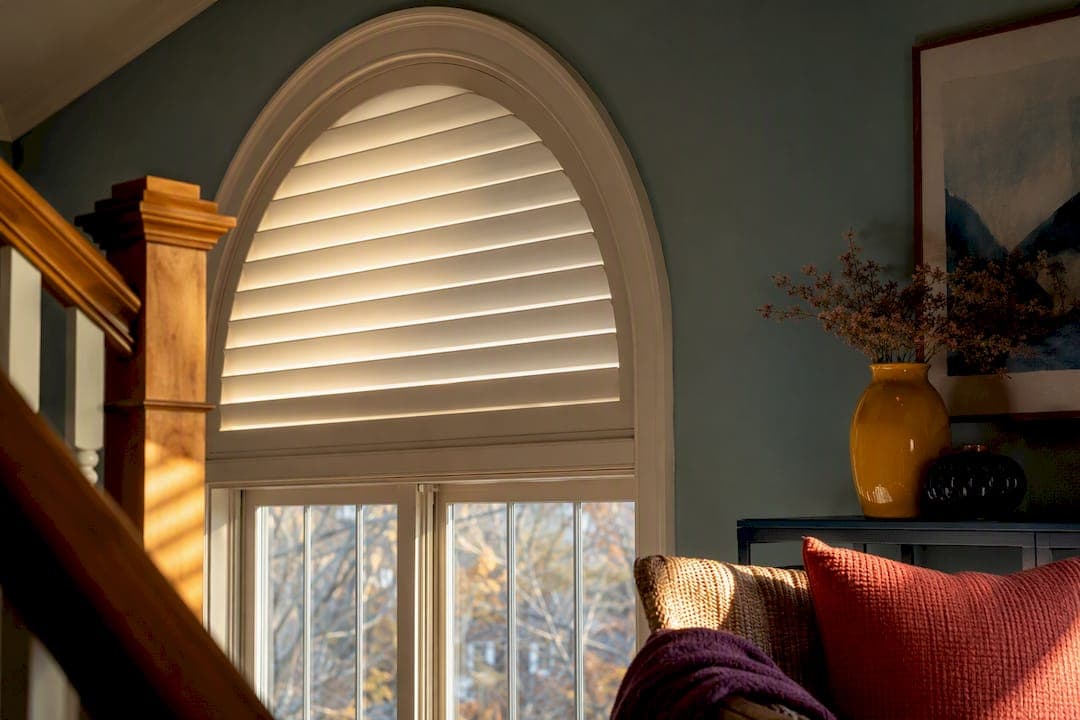
For most arched windows, a cellular (honeycomb) shade cut to match the curve is the most reliable starting point, since it hugs the shape and adds a layer of insulation most flat treatments cannot. Add motorization when the arch sits above a stairwell, over a door, or anywhere out of easy reach. Either way, expect custom work: an off-the-shelf frame almost never matches an arch's actual dimensions, and getting it wrong is expensive. The company measures every arch on-site before recommending a fix.
TL;DR:
- Custom on-site measurement ensures accurate arch framing, especially for irregular shapes, to prevent costly errors or fitting issues.
- Cellular honeycomb shades are the most popular choice because they follow the curve and provide insulation, suitable for both fixed and operable applications.
- Motorization is highly recommended for high, hard-to-reach arches, with options including rechargeable batteries, solar assist, or hardwired systems, controlled via apps or voice commands.
- Fixed decorative arch toppers work well for purely ornamental windows, while operable shades or shutters suit windows that need light control or privacy.
- Pricing varies from fixed decorative pieces to complex motorized setups, with the latter being more expensive but offering convenience and integration into smart home systems.
Table of Contents
- What Are the Best Coverings for Arched Windows?
- How Do You Measure an Arched Window for Coverings?
- Should You Motorize an Arched Window Shade?
- Which Fabric and Opacity Should You Choose for an Arched Window?
- How Much Should an Arched Window Covering Cost?
- What Should You Ask Before Booking Custom Arch Measurements?
- How Made in the Shade Bucks County Approaches Arched Windows
- Get an Exact Fit With a Free In-Home Consultation
- Sources
- FAQ
What Are the Best Coverings for Arched Windows?
Arched window coverings fall into a handful of categories, and the right one depends on how much you need to control light versus how much you just want the window to look finished. Homes across the Philadelphia suburbs, from stone farmhouses to newer colonials, tend to have arches over entry doors, staircases, or great room windows, and each location changes the calculus.
- Cellular/honeycomb shades: pleated fabric that follows the arch's curve almost seamlessly, popular because it conforms to the shape and traps insulating air pockets. Works whether the arch opens or stays fixed.
- Pleated fan shades: similar construction, usually stationary, and often chosen for smaller decorative arches where daily adjustment isn't needed.
- Drapery: hung below or around the arch for a dramatic, tall-ceiling look. Doesn't cover the curve itself but frames it.
- Shutters: custom-cut wood or faux wood panels that follow the arch permanently, giving a classic, architectural finish.
- Layered setups: a fixed decorative piece on the arch combined with an operable shade on the rectangular window below.
Design guides generally point to drapery, shutters, or layered combinations as the three primary paths when a shaped shade alone doesn't fit the room's style. A fixed decorative arch topper makes sense when the window is purely ornamental, like a small transom above a door, where you'll never need to adjust light. But if the arch sits over a window you actually look through, or one that lets in strong afternoon sun, you want operability. Layering solves the tension: leave the arch as a fixed accent and let the rectangle below do the functional work.
How Do You Measure an Arched Window for Coverings?
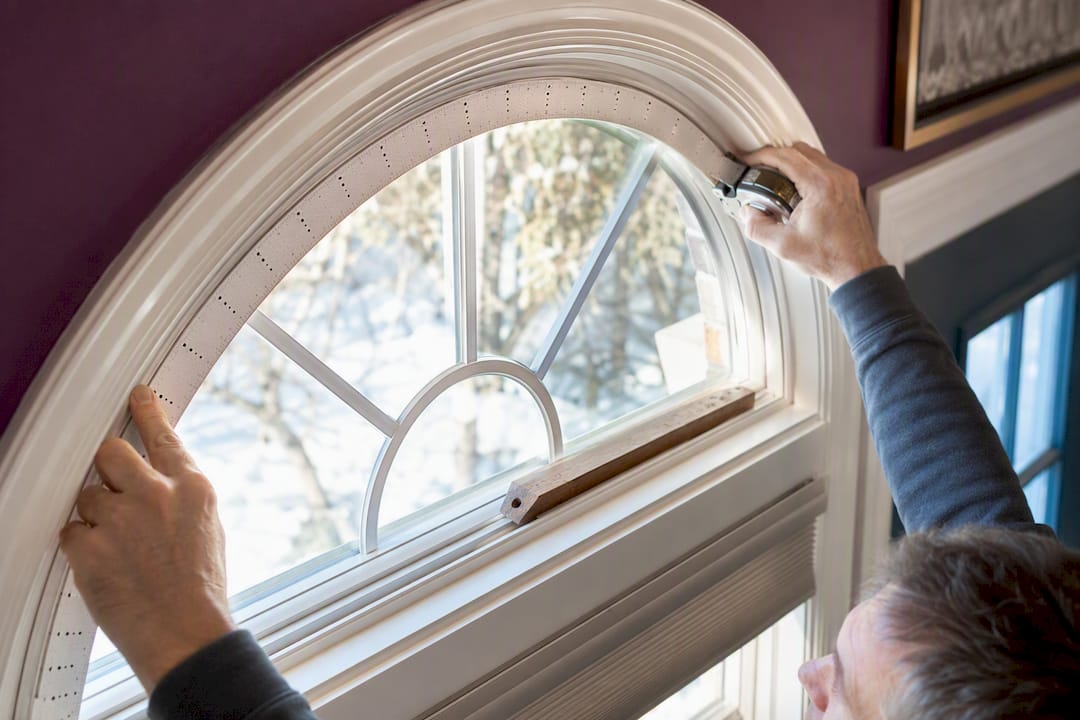
Getting an arch right on paper before it ever reaches a workshop saves you a return trip and a redo. The shape isn't just "wide and tall." It has a springline (where the curve starts), a rise (the curve's peak height), and often a slight asymmetry that only shows up when you measure carefully.
- Measure the width at the springline, where the straight sides end and the curve begins.
- Measure the rise from the springline to the highest point of the arch.
- Take width measurements at three points, left, center, and right, since most professional installers use the narrowest of these readings to avoid binding when the frame has settled unevenly.
- If the arch is elliptical or irregular rather than a true half circle, trace it with a paper or cardboard template.
- Decide on inside versus outside mount before ordering; inside mount looks cleaner but demands more precision, while outside mount can hide a slightly imperfect frame.
Inside mounts sit flush within the arch and generally look more built-in, but any measuring error shows up as a visible gap. Outside mounts forgive small mismatches by covering more of the surrounding wall. Because mismeasuring on a custom arch is usually non-returnable, a professional on-site measurement is worth the appointment, especially on older homes where frames have shifted over decades.
Pro Tip: If your arch looks like a true half circle but the numbers don't quite match on paper, trust the template over the tape measure. Even a quarter-inch of horizontal splay can throw off a factory cut.
Should You Motorize an Arched Window Shade?
Motorization earns its cost on arches you can't comfortably reach, over a stairwell, above a door transom, or set high on a two-story great room wall. Manufacturers market motorized arch shades specifically for these hard-to-reach spots, where a pull cord or wand simply isn't practical, and where a ladder shouldn't be part of your daily routine.
Power options vary by installation:
- Rechargeable battery: no wiring needed, recharge every few months depending on use.
- Solar assist: a small panel keeps the battery topped off if the window gets direct sun, an option built into several current motorized cellular shade lines.
- Hardwired low-voltage: cleanest long-term option but usually needs an electrician during installation.
Control methods now typically include a physical remote, a smartphone app, voice commands through Alexa, Apple HomeKit, or Google Assistant, and scheduling that opens shades at sunrise and closes them at sunset automatically. Maintenance is minimal: occasional dusting and a battery check twice a year. For anything wired into the wall, plan on professional installation from the start. If your household already runs smart lighting or a thermostat through one app, adding motorized shades tends to slot into that setup rather than creating a second system to manage.
Which Fabric and Opacity Should You Choose for an Arched Window?
The right opacity depends on what the window actually does for the room, not just how it looks from the street. A light-filtering fabric softens glare while keeping the room bright, which works well for east-facing arches that catch harsh morning sun. Room-darkening fabric cuts most light and suits bedrooms or media rooms. Blackout is the choice when a nursery or screen wall needs the arch fully covered.
- Light-filtering: brightens the room while cutting glare, good for living rooms and kitchens.
- Room-darkening: blocks most but not all light, common in bedrooms.
- Blackout: near-total light block, best for nurseries or home theaters.
- Sheer: prioritizes softness and ambiance over privacy, better for a decorative fixed arch than a bedroom window.
- Woven wood: adds texture and a natural look, though it offers less privacy than a solid fabric.
Honeycomb construction has a practical edge here beyond looks: the pleated air pockets add measurable insulation, which matters in a Bucks County winter when a large arched window can be a real source of heat loss. UV protection is worth asking about too, since faded floors and furniture near a south-facing arch are a common complaint years after move-in.
How Much Should an Arched Window Covering Cost?
Pricing on arched treatments generally falls into three bands. A fixed decorative arch piece, meant purely for looks, sits at the lower end. A custom operable shade or shutter that opens and closes costs more because of the fabrication precision an arch demands. Motorized custom treatments sit at the top, reflecting the motor, mounting hardware, and often an electrician's time.
A few factors push you toward the higher end:
- The arch sits at eye level or somewhere you look at daily, not just a decorative transom.
- The window gets strong, direct sun for several hours.
- You'll actually adjust it often, not leave it in one position.
- You want it tied into an existing smart-home system.
If the arch is small, decorative, and rarely a factor in daily comfort, a fixed piece or even a UV-blocking film may be all it needs. Save the bigger investment for the windows you interact with.
What Should You Ask Before Booking Custom Arch Measurements?
A short conversation upfront prevents most of the headaches homeowners run into with custom arch orders.
- Will someone measure on-site, or are you expected to submit your own numbers?
- Do they use a template for irregular or elliptical arches, or only standard width and height?
- What's covered under warranty, and for how long?
- If you want motorization, do they confirm power and wiring needs before installation day?
- What's the lead time from measurement to install?
- What's the return or remake policy if the fit is off?
Red flags worth walking away from: no offer of an on-site measurement for a custom arch, a warranty answer that stays vague, or a motorized quote that skips any mention of power requirements. Before the consultation, jot down how you use the room and whether glare or privacy is the bigger daily annoyance, and expect to see physical fabric and shade samples in your own light rather than on a screen. It's also worth a quick check of a vendor's complaint history before signing anything.
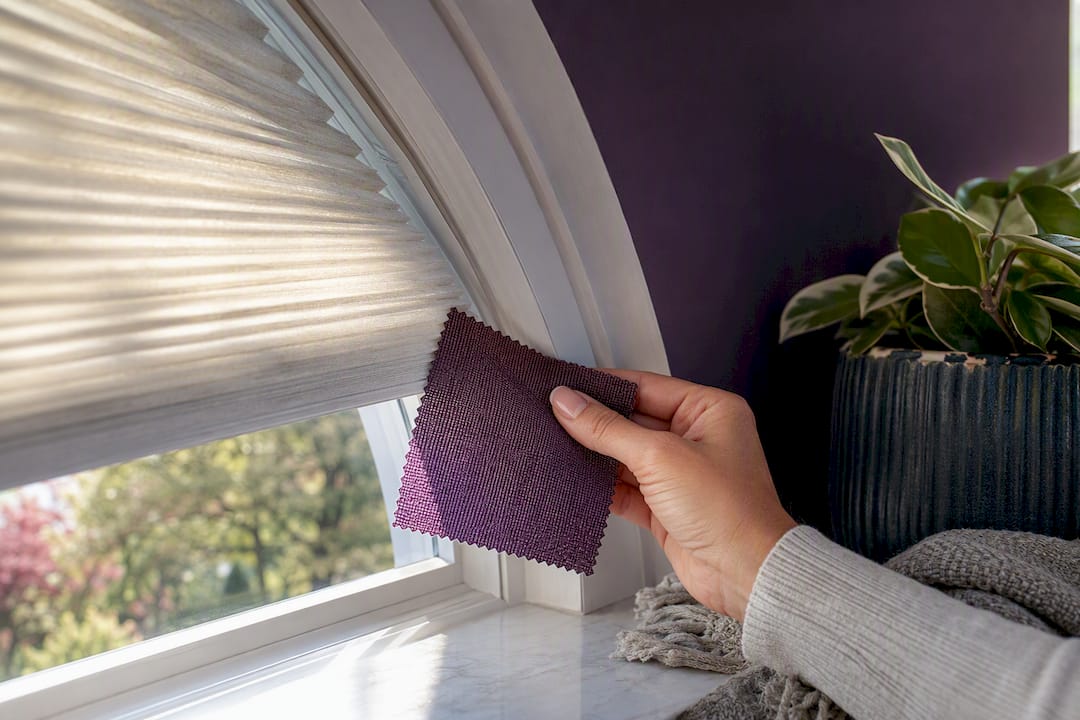
Pro Tip: Ask to see the fabric sample held up against your actual arch, not a rectangular swatch card. Curved light behaves differently than flat light, and you'll notice the difference in person.
How Made in the Shade Bucks County Approaches Arched Windows
Every arched window consultation starts in your home, with samples brought to you rather than a showroom visit, since Made in the Shade Bucks County doesn't operate a storefront. Measurements are taken on-site, at multiple points along the curve, before anything is ordered. For arches that call for motorization, installers bring smart-home and cordless, child-safe experience to the job, backed by manufacturer warranties on the finished product.
— Tony
Get an Exact Fit With a Free In-Home Consultation
Arched windows punish guesswork, and that's exactly where a free in-home consultation earns its place. Made in the Shade Bucks County brings fabric and shade samples directly to your home in Bucks County or Mercer County, measures the arch on-site, and walks through motorization and smart-home options before you commit to anything.
The appointment includes real samples held against your actual window, a professional measurement of the arch at multiple points, and a straightforward look at power and control options if you're considering a motorized shade. There's no pressure to decide on the spot, and no showroom trip to schedule around. If you're ready to see what fits, request your free in-home consultation or browse the current shade collection beforehand to get a sense of styles and fabrics before your consultant arrives.
Sources
- Best Window Treatments for Arched Windows: How to Cover the Curve With – BEASEN
- Graywind Motorized Arch Cellular Shades
- Arched Window Blinds: Options, Sizing & Buying Guide
FAQ
What Are the Best Window Coverings for Arched Windows?
Cellular (honeycomb) shades are usually the top pick because their pleats follow the curve and add insulation, though drapery, shutters, and layered arch-plus-rectangle setups work well depending on the room's style and function.
How Do You Cover Up an Arched Window?
Most homeowners either fit a custom arch-shaped shade or shutter directly to the curve, or install a fixed decorative piece on the arch and pair it with an operable shade on the rectangular window below.
Can You Put Blinds on an Arched Window?
Standard slat blinds don't bend to fit a curve, so arches typically call for shaped cellular shades, pleated fan shades, or custom shutters cut to match the exact arch instead.
What Is the Newest Trend in Window Coverings for Arches?
Motorized cellular arch shades with smart-home integration are the clearest current trend, letting homeowners control hard-to-reach arched windows through an app, voice command, or automatic schedule.
Do Arched Windows Always Need Custom Measurements?
Almost always. Irregular or elliptical arches commonly need a paper or cardboard template rather than a simple width and height measurement, since even small frame shifts can throw off a factory cut.