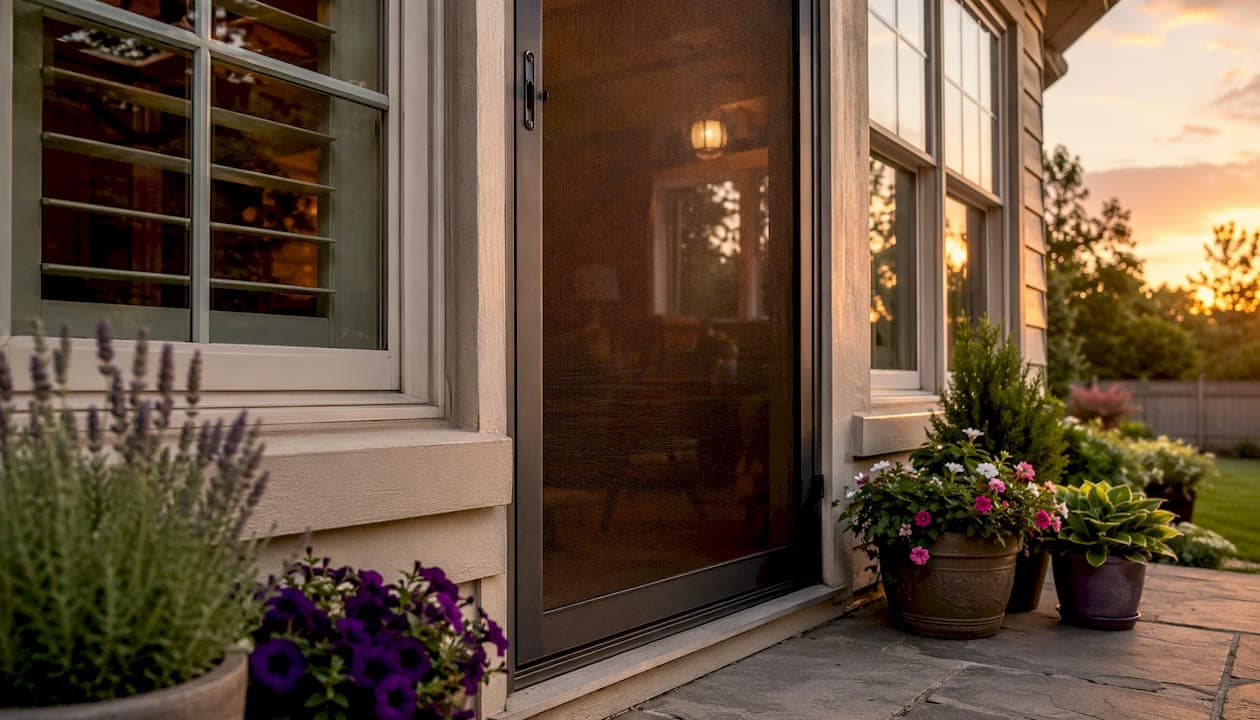
For most homeowners in Bucks County and Mercer County, a custom motorized retractable screen is the smartest choice for insect control, solar protection, and keeping your patio looking great year-round. When retracted, the mesh disappears into a discreet housing, preserving your home's architectural lines. When deployed, it blocks mosquitoes, no-see-ums, and other insects while blocking up to 70–90% of solar heat gain on south- or west-facing patios.
What to look for at a glance:
- Motorized retractable screens — best overall; smart-home compatible with Alexa and major platforms, cordless/child-safe options available
- Manual retractable screens — solid mid-range choice for simpler openings
- Fixed mesh frames — budget-friendly and durable for permanently screened porches
- Zip/track systems — superior side sealing for wind and insect control
- Solar/privacy screens — dual-purpose: insect barrier plus UV and heat reduction
Made in the Shade Bucks County offers free in-home consultations covering professional measurement, mesh selection, and a written installation quote. Trained installers handle every project, and most products carry limited lifetime manufacturer warranties. Service covers Bucks County, PA and Mercer County, NJ.
Table of Contents
- What types of patio bug screens can you choose from?
- How do mesh materials affect visibility, airflow, and bug protection?
- How do you choose a reliable local patio screen installer?
- What drives the cost of patio screen installation?
- What post-installation support should you expect?
- Made in the Shade Bucks County brings the consultation to you
- FAQ
- Key Takeaways
What types of patio bug screens can you choose from?
Fixed mesh frames are the classic option. Aluminum or fiberglass mesh is stretched over a rigid frame and permanently installed. They work well for screened porches with defined openings and require minimal maintenance.
Manual retractable screens roll up by hand when not in use. They cost less than motorized systems and suit homeowners who want flexibility without the electronics.
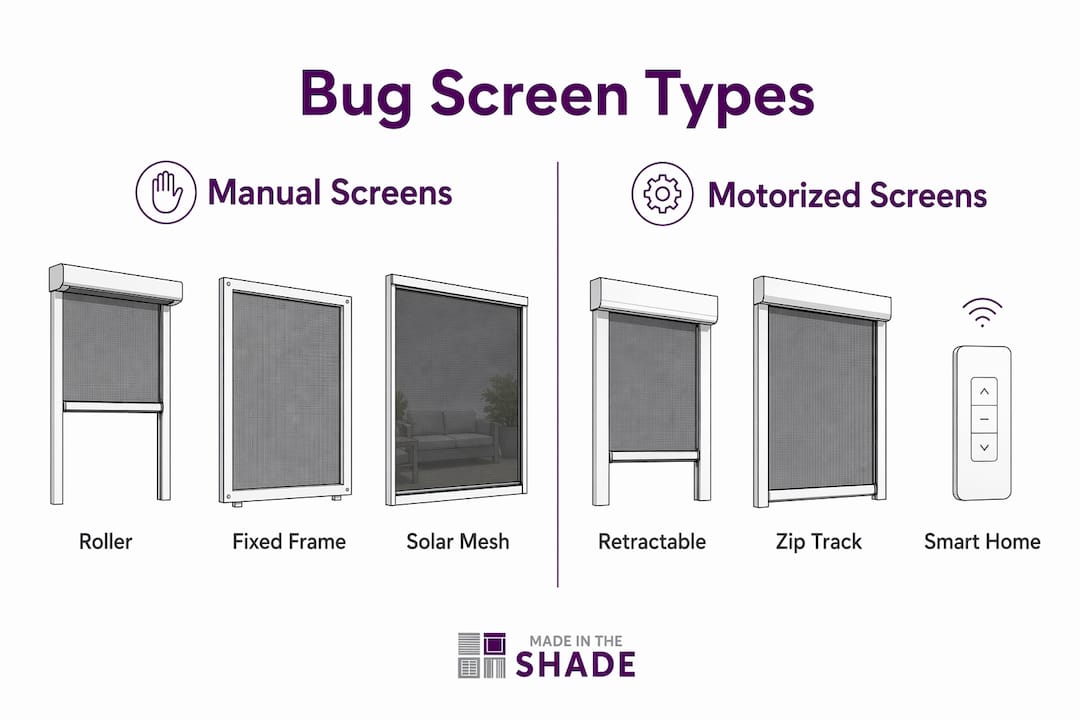
Motorized retractable screens are the premium choice. At the press of a button or a voice command, the screen extends or retracts. The mesh retracts into a compact housing when not needed, so your view stays open on clear days. These integrate with Alexa and other smart-home platforms for scheduled or sensor-based operation.
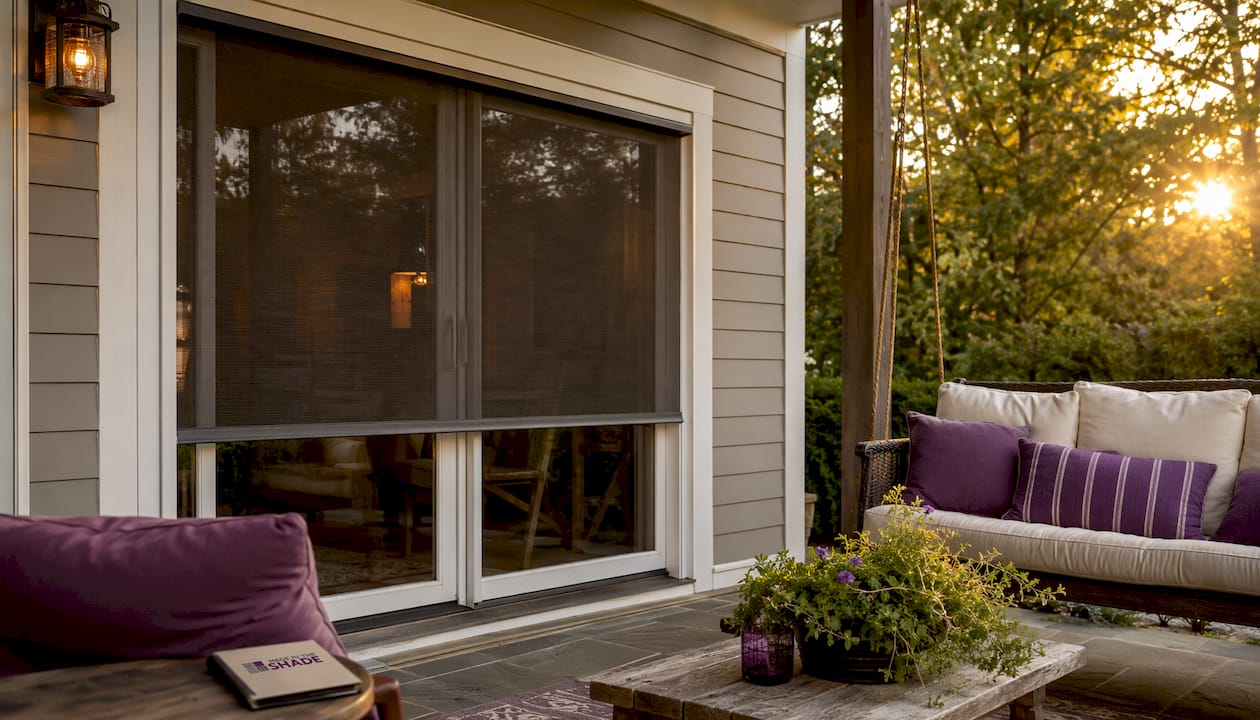
Zip/track systems use a zipper-style side channel that locks the mesh edge against the track. This creates a tighter seal than standard retractables, reducing gaps where insects can enter and improving wind resistance.
Solar and privacy screens serve double duty. The woven mesh blocks insects while also cutting UV exposure and reducing heat buildup, making them especially practical for afternoon sun on west-facing decks common in Bucks County neighborhoods.
How do mesh materials affect visibility, airflow, and bug protection?
Mesh choice is where most homeowners get tripped up. The two most common options are 18×14 mesh and 20×20 mesh. Standard 18×14 mesh blocks most mosquitoes and flies while maintaining good airflow and visibility. If no-see-ums or biting midges are a problem near your property, 20×20 mesh closes those gaps but reduces airflow noticeably.
Material durability matters in the Philadelphia suburbs, where summers are humid and winters bring freeze-thaw cycles. Fiberglass mesh offers excellent clarity but can weaken with prolonged UV exposure. Vinyl-coated polyester and extruded aluminum framing hold up better against moisture, pet damage, and seasonal temperature swings. For families with pets or active kids, heavy-duty vinyl-coated mesh is worth the upgrade.
Pro Tip: Bring a sample of 20×20 mesh outside on a sunny day before committing. The reduced openness is barely noticeable in shade but can feel more closed-in on a bright afternoon.
How do you choose a reliable local patio screen installer?
Start with these questions before signing anything:
- Does the installer do a professional on-site measurement, or do they quote from dimensions you provide?
- What side-retention and track system do they use? Stronger side retention delivers better bug control and wind tolerance.
- Are manufacturer warranties included, and does the installer back their own labor?
- Can they show local references or reviews from Bucks or Mercer County projects?
Red flags include quotes given without a site visit, no written warranty on installation labor, and vague answers about mesh specifications. A professional measurement identifies out-of-plumb walls, uneven decks, and other conditions that cause gaps in a finished screen. Professional measurements that document opening tolerances and floor irregularities are what separate a tight, smooth-operating screen from one that lets bugs through at the edges.
Check Google reviews and ask specifically about post-installation service. A local, licensed business with trained installers is a stronger bet than a national chain with local subcontractors.
What drives the cost of patio screen installation?
Pricing varies considerably based on several factors. Curtain-track netting is the lowest-cost entry point, with DIY options running a few hundred dollars, though sealing and aesthetics are trade-offs. Motorized retractable systems are a larger investment once professionally installed, reflecting the motor, housing, track hardware, and custom fabrication.
The main cost drivers for any professional installation:
- Opening size and count — larger or multiple openings increase material and labor
- Motorization — adds motor, wiring, and smart-home integration components
- Mesh type — solar and no-see-um meshes typically cost more than standard fiberglass
- Track and zip systems — premium side-sealing hardware adds to the total
- Structural prep — if hardscape or framing work is needed before installation, budget for that separately
A written quote from a local installer should itemize opening dimensions, mesh spec, hardware type, and labor. Any quote that skips these details is incomplete.
What post-installation support should you expect?
A quality installer stands behind the product after the job is done. For motorized systems, that means motor warranty coverage, remote or smart-home reconfiguration support, and a clear process for reporting issues. For fixed or retractable screens, it means rescreening service when mesh eventually wears or tears.
Ask your installer upfront whether they offer repair visits or connect you with a screen repair specialist for ongoing maintenance. Mesh on a well-maintained system can last many years, but UV exposure and physical contact will eventually require attention. Manufacturer warranties on most professional-grade systems cover defects in materials and motors; installation labor warranties vary by provider, so confirm the terms in writing before your project starts.
Made in the Shade Bucks County brings the consultation to you
Choosing the right outdoor patio screen is easier when a design consultant comes to your home with samples, a measuring tape, and real answers. Made in the Shade Bucks County's free in-home consultation covers on-site measurement of every opening, a hands-on look at mesh options and fabric samples, a live demo of motorized controls including Alexa compatibility, and a written installation quote before you commit to anything. There's no showroom to navigate and no pressure to decide on the spot.
Cost drivers like opening size, motorization, mesh grade, and track system are all reviewed during the visit so you understand exactly what you're paying for. Made in the Shade Bucks County serves Bucks County, PA and Mercer County, NJ exclusively, with trained installers and manufacturer warranties that include limited lifetime coverage on most products. Schedule your free in-home consultation today and get a custom solution designed for your home.
FAQ
What mesh size blocks mosquitoes on a patio?
Standard 18×14 mesh blocks most mosquitoes and flies. For no-see-ums or biting midges, upgrade to 20×20 mesh, which reduces airflow slightly but closes the gaps those smaller insects use.
Are motorized patio screens compatible with Alexa?
Yes. Motorized retractable screens can be paired with Alexa and other major smart-home platforms for scheduled or voice-activated control, raising or lowering based on time of day or conditions.
Does Made in the Shade Bucks County install patio screens?
Made in the Shade Bucks County offers professional installation of custom outdoor patio screens in Bucks County, PA and Mercer County, NJ, with a free in-home consultation and manufacturer warranties on most products.
How long does a patio screen installation take?
Timeline depends on opening count, motorization, and whether any structural prep is needed. A professional installer can give you a realistic schedule during the in-home measurement visit.
What is included in a professional installation quote?
A complete quote should list opening dimensions, mesh specification, hardware and track type, motorization details if applicable, and labor. Any quote missing these specifics is incomplete.
Key Takeaways
Motorized retractable screens with professional installation offer the best combination of insect control, solar protection, and smart-home convenience for Bucks and Mercer County homeowners.
| Point | Details |
|---|---|
| Best overall screen type | Motorized retractable screens balance insect control, solar reduction, and curb appeal for most homeowners. |
| Mesh selection matters | 18×14 mesh suits most mosquito control; 20×20 is needed for no-see-ums but reduces airflow noticeably. |
| Solar heat reduction | High-performance solar mesh can block up to 70–90% of solar heat gain, keeping patios cooler. |
| Professional measurement is critical | On-site measurement identifies out-of-plumb walls and floor irregularities that cause gaps and poor sealing. |
| Made in the Shade Bucks County | Offers free in-home consultations, trained installation, and limited lifetime warranties for Bucks and Mercer County homeowners. |