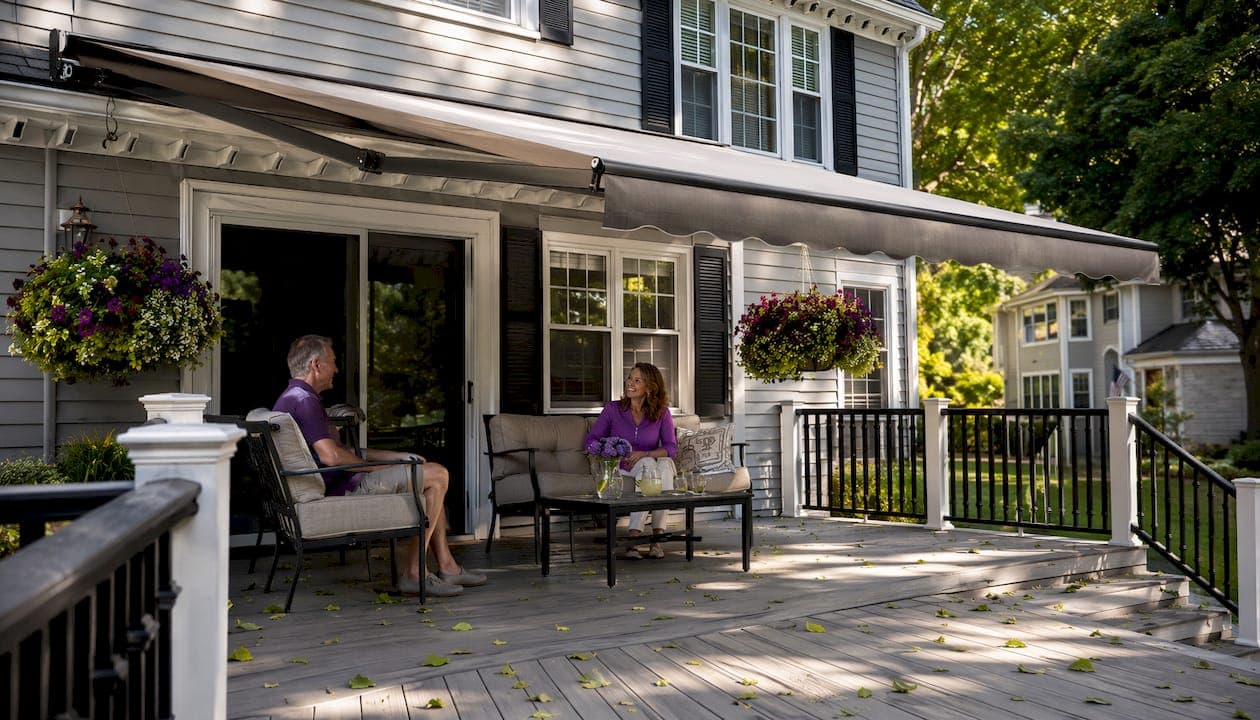
Most homeowners pay between $1,500 and $7,000 installed for a retractable awning, with the national average landing around $2,000 for a standard residential project. The most common spend typically covers mid-size motorized units, professional labor, and electrical work within a moderate budget range. A few quick anchors to set realistic expectations:
- Window and door awnings typically install for $350–$900, making them the most affordable entry point.
- Patio and deck awnings run $1,000–$6,000 for most residential projects, with large custom motorized systems reaching $15,000–$25,000.
- Motorization adds roughly $1,000–$3,000 to any base unit cost, depending on motor quality and sensor options.
Size, fabric quality, frame strength, and mounting complexity are the four variables that move a quote the most. If you're in Bucks County, PA or Mercer County, NJ, Made in the Shade Bucks County offers free in-home consultations that include accurate measurements and a written installed price, so you're not guessing from national averages alone.
Table of Contents
- How much does a retractable awning cost by type?
- What factors drive your retractable awning price up or down?
- Breaking down the installed cost: product, labor, and extras
- Sample installed cost estimates for common sizes
- How long do retractable awnings last, and what does maintenance cost?
- DIY vs. professional installation: is the savings worth it?
- How to get an accurate quote before you commit
- Key Takeaways
- What installers know that the price guides don't tell you
- Accurate awning pricing starts with a free in-home visit
- FAQ
How much does a retractable awning cost by type?
The type of awning you choose sets the floor and ceiling of your budget before any other variable enters the picture. The table below shows typical installed price ranges, meaning product plus labor, for the most common residential configurations.
| Awning Type | Typical Installed Range |
|---|---|
| Manual window/door awning | $350–$900 |
| Small manual patio/deck awning | $800–$2,500 |
| Medium motorized patio awning | $2,500–$4,000 |
| Large motorized patio awning | $4,000–$7,000+ |
| Cassette/low-profile motorized | $3,500 |
| Freestanding pergola-style unit | $5,000 |
| Full custom patio cover system | $15,000–$25,000 |
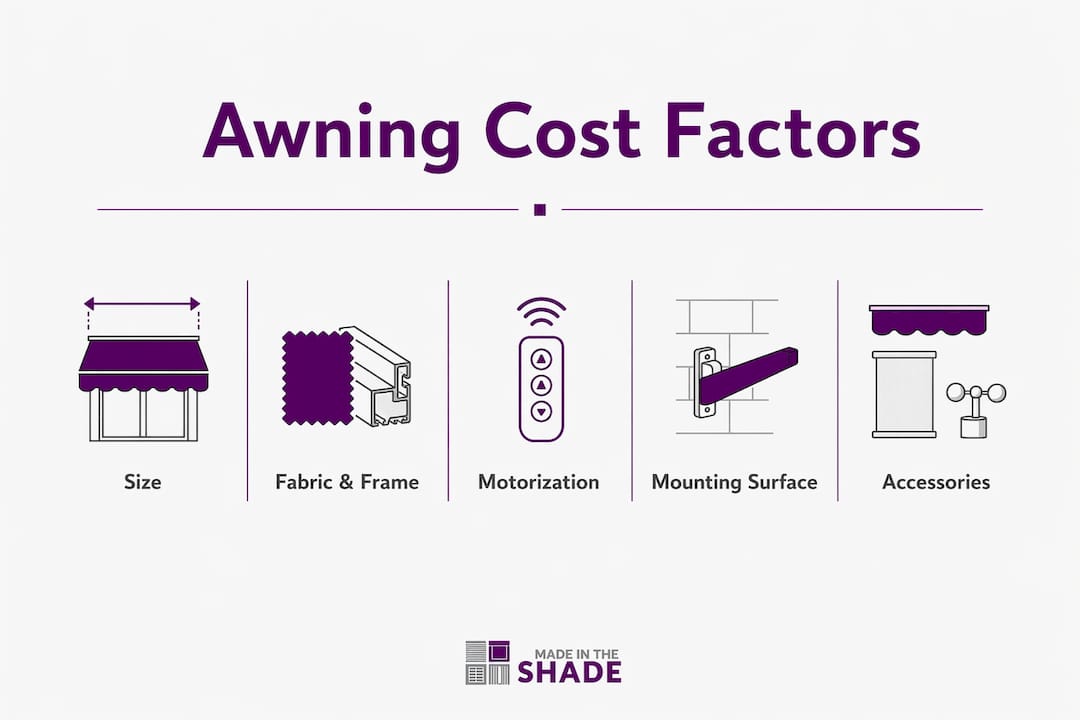
Manual units cost less upfront because there's no motor, wiring, or control system to purchase or install. Cassette awnings sit at a premium within their size class because the housing fully encloses the fabric when retracted, which adds material and fabrication cost but meaningfully extends fabric life. Freestanding systems require footings or post anchors, which adds labor time and sometimes a permit. Full patio cover systems are essentially outdoor rooms and carry pricing to match.
Every figure above reflects installed cost. The product sticker price alone typically covers only 60–75% of what you'll actually spend once labor, mounting hardware, and any electrical work are added.
What factors drive your retractable awning price up or down?
Size and coverage area
Square footage is the most direct cost driver. Installed costs run roughly $12.50–$30 per square foot depending on materials and complexity. A 10x10 awning covers 100 square feet; a 20x12 covers 240. That difference in fabric, frame, and motor size compounds quickly. Larger spans also require heavier-duty arms and brackets, which adds both material and labor cost.
Fabric and frame material
Acrylic and woven acrylic fabrics cost more than vinyl-coated polyester but hold color better under UV exposure and typically last longer in humid, variable climates like the Philadelphia suburbs. For Bucks and Mercer county homes that see hot summers, wet springs, and occasional heavy snow, fabric quality is worth the premium. Aluminum frames are standard; powder-coated finishes add modest cost but resist rust and fading far better than bare metal.
Motorization and smart features
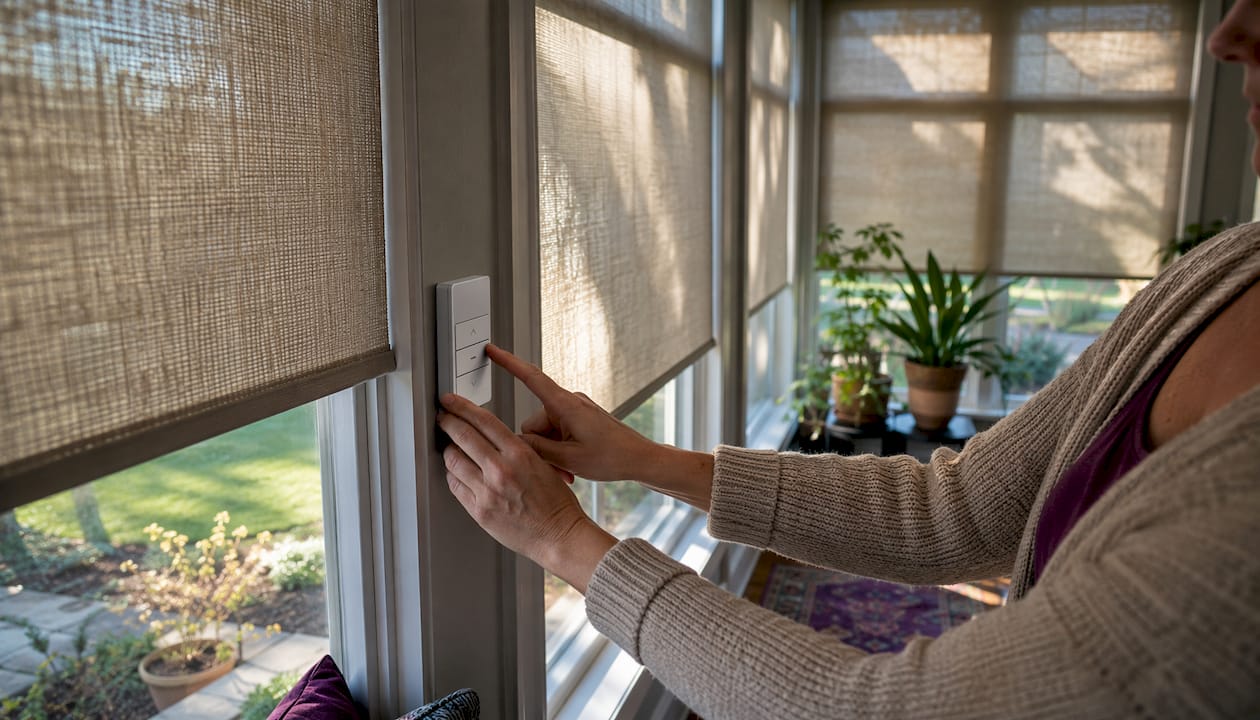
A motor transforms an awning from a manual crank to a one-touch or voice-activated shade system. That convenience carries a real price: motorization typically adds $1,000–$3,000 to the project. Wind sensors, rain sensors, and smart-home integration (compatible with Alexa and major platforms) add further cost but also protect the awning automatically when weather turns. A wind sensor that retracts the awning before a storm can pay for itself by preventing a single repair event.
Mounting surface and home exterior
Older homes with wood siding, stucco, or brick require more preparation work than newer construction with composite or vinyl siding. Installers may need to reinforce wall sheathing, use specialized anchors, or build out a mounting ledger. Each of those steps adds labor time. Homes with deep eaves or unusual rooflines can also complicate bracket placement and pitch adjustment.
Accessories
LED lighting strips, side screens, remote controls, and automatic sensors each add to the final installed price. These are worth budgeting for upfront rather than retrofitting later, since adding them after installation typically costs more in labor.
Pro Tip: Ask your installer to quote the wind sensor as a line item. In the Philadelphia suburbs, summer thunderstorms can arrive with little warning, and an automatic sensor is one of the most practical upgrades you can add to a motorized system.
Breaking down the installed cost: product, labor, and extras
Understanding where your money goes helps you evaluate quotes and spot anything that's been left out. A complete installed quote should include most or all of the following line items:
- Awning unit (fabric, frame, arms): typically 60–75% of the total project cost for a standard motorized patio awning.
- Motor and electronics: often bundled into the unit price, but sometimes quoted separately, especially for premium motors or smart-home control modules.
- Mounting hardware: brackets, lag bolts, and wall anchors; usually a modest line item but can increase on masonry or reinforced surfaces.
- Installation labor: professional installation ranges from $250 to $3,000 depending on project complexity, height, and mounting conditions.
- Electrician work: motorized units often require a licensed electrician to run a dedicated circuit or connect to an existing outdoor outlet; this is sometimes billed separately and can add several hundred dollars.
- Permit and inspection fees: simple awning installs often don't require permits, but electrical wiring or structural modifications frequently do. An experienced installer will tell you upfront what your local jurisdiction requires.
- Removal of an existing awning: if you're replacing an old unit, removal and disposal add labor time and sometimes a disposal fee.
Warranties on retractable awnings typically cover the frame and mechanical components for five to ten years, with fabric warranties running three to five years depending on the manufacturer. Motor warranties vary widely. What warranties don't cover: damage from storms when the awning was left extended, improper cleaning, or modifications made after installation.
Sample installed cost estimates for common sizes
These estimates translate per-square-foot pricing into real project numbers. They assume standard aluminum frames, professional installation on a typical wood-framed suburban home, and average labor rates for the greater Philadelphia area.
| Size | Manual (fabric only) | Motorized (standard) | Motorized + cassette + sensor |
|---|---|---|---|
| 10x10 (100 sq ft) | $1,500–$2,200 | $2,800–$4,000 | $4,500–$6,000 |
| 10x10 (100 sq ft) | $1,800–$2,000 | $3,200 | $5,000 |
| 12x10 (120 sq ft) | $2,000–$3,000 | $3,500–$5,000 | $5,500–$7,500 |
| 20x12 (240 sq ft) | $3,500–$5,000 | $5,500 | $8,000 |
A few things these numbers assume: standard mounting conditions, no electrician upgrade needed, and mid-grade acrylic fabric. Here's how configurations shift within a size:
- Low end (manual fabric): hand-crank operation, standard polyester or entry-level acrylic, basic powder-coat frame, no accessories.
- Mid-range (motorized acrylic): quality acrylic fabric, aluminum frame, motor with remote, standard wall mount.
- High end (full cassette with wind sensor): enclosed cassette housing, premium woven acrylic, motor, wind sensor, smart-home control, and sometimes LED lighting.
Regional labor variation matters. Labor rates in the Philadelphia suburbs tend to run higher than national averages published by sources like the Bureau of Labor Statistics, so treat the lower end of any national range as a floor, not a target. Local site conditions, such as a second-story deck or a brick exterior, can push a quote above the sample ranges above.
How long do retractable awnings last, and what does maintenance cost?
A well-maintained retractable awning typically lasts 10–15 years for the frame and mechanical components, with fabric needing replacement every 5–10 years depending on UV exposure, humidity, and how often it's retracted during bad weather. In the Philadelphia suburbs, where summers are humid and winters bring freeze-thaw cycles, fabric at the lower end of that range is common without proper care.
The single most effective maintenance action is also the simplest: retract the awning during high winds, heavy rain, and storms. Leaving an awning extended in a summer thunderstorm is the leading cause of torn fabric and bent arms. A motorized awning with a wind sensor handles this automatically.
Pro Tip: Before winter, give the fabric a thorough cleaning with mild soap and water, let it dry completely before retracting, and store it fully closed for the season. Trapping moisture inside a closed cassette accelerates mildew and frame corrosion.
Routine maintenance costs are modest: a professional cleaning or re-treatment of fabric runs $100–$300 depending on size. Bracket inspections and lubrication of moving parts are typically included in an installer's annual service visit if offered. Fabric replacement, when needed, runs roughly 40–60% of the original fabric cost since the frame and motor remain.
Lifespan at a glance: Frame: 10–15 years. Fabric: 5–10 years. The gap between those two timelines is almost always determined by how consistently the awning is retracted during storms and off-season months.
DIY vs. professional installation: is the savings worth it?
DIY installation can save several hundred to a few thousand dollars on labor, and for a small manual window awning, it's a reasonable option if you're comfortable with basic carpentry and have a solid mounting surface. The math changes significantly for anything larger or motorized.
- When DIY is reasonable: small manual awnings (under 10 feet wide), straightforward wood-framed walls, no electrical work required, and a manufacturer that explicitly supports DIY installation without voiding the warranty.
- When to hire a pro: any motorized system, any awning wider than 12 feet, homes with brick or stucco exteriors, second-story installations, or projects where electrical work is needed. Motorized systems require exact calibration and often a dedicated circuit; errors can void the manufacturer warranty and create safety risks.
- The warranty risk: most motorized awning warranties require professional installation. A DIY install that causes a motor failure or structural issue will likely result in a denied warranty claim, turning a labor savings into a full replacement cost.
- Structural safety: installers assess wall sheathing, stud placement, and load capacity before mounting. An improperly anchored awning on a windy day can pull away from the wall and cause real damage to the home's exterior.
For most Bucks and Mercer county homeowners, professional installation on a motorized patio awning is the lower-risk choice over a 10-year ownership horizon.
How to get an accurate quote before you commit
Arriving at a quote appointment prepared saves time and prevents the most common source of surprise change orders: missing information. Here's what to have ready:
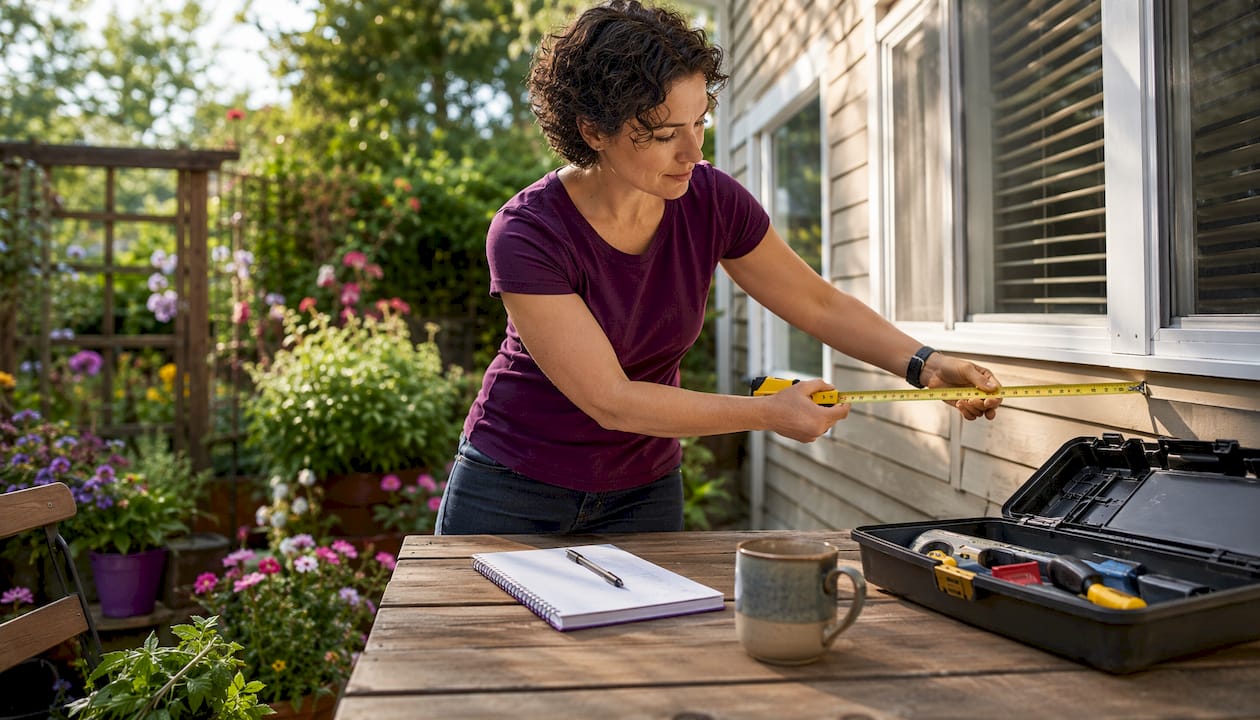
- Exact coverage dimensions: measure the width of the area you want shaded and how far out from the wall you need coverage (projection depth).
- Mounting wall material: know whether it's wood framing, brick, stucco, or composite siding. Take a photo.
- Photos of the mounting area: show the wall, any eaves or overhangs, nearby windows or doors, and the roofline above.
- Existing awning details: if you're replacing an old unit, note the brand, size, and mounting style, and confirm whether removal is included in the quote.
- Feature preferences: decide upfront whether you want motorization, a wind sensor, smart-home integration, LED lighting, or side screens. These affect the quote significantly.
- Questions to ask every bidder:
- What does the warranty cover, and who handles warranty claims?
- Is electrician work included, or billed separately?
- Do you handle permit applications, and what's the typical permit cost here?
- What's the lead time from deposit to installation?
- What exactly is included in the written quote?
Timeline to expect: custom fabric orders typically take 4–8 weeks from deposit to delivery. Installation itself usually takes a half-day to a full day depending on size and complexity. Plan for a 6–10 week window from signed contract to completed install during peak season (spring and early summer), when scheduling fills quickly.
Key Takeaways
Most retractable awning projects land between $2,000 and $4,000 installed, with motorization, fabric quality, and mounting complexity being the three variables that move a quote the most.
| Point | Details |
|---|---|
| Typical installed range | Most residential projects fall between $1,500 and $4,000; the common spend band is $2,000–$4,000. |
| Biggest cost drivers | Size, motorization ($1,000–$3,000 added), fabric quality, and mounting surface complexity move quotes the most. |
| Most important care action | Retracting during storms and off-season months is the single most effective way to extend awning life. |
| Local pricing note | Labor rates in Bucks and Mercer counties tend to run above national averages; use published ranges as a floor, not a target. |
| Made in the Shade Bucks County | Offers free in-home consultations with accurate measurements and a written installed quote for Bucks County, PA and Mercer County, NJ homeowners. |
What installers know that the price guides don't tell you
Most online cost guides present national averages and leave homeowners to figure out how local conditions affect the final number. Having worked with homes across Bucks County and Mercer County, the picture looks a little different from the installer's side.
The older housing stock in this area, think 1960s–1980s colonials and split-levels with wood or aluminum siding, often requires more prep work than a new build. Wall sheathing may need reinforcement before a heavy motorized awning can be safely anchored. That's not a problem, but it's a line item that surprises homeowners who quoted only from a national average.
Seasonal scheduling is also real. Spring is the busiest installation window by far, and custom fabric lead times of 4–8 weeks mean that a homeowner who calls in April may not have their awning installed until June. Booking a consultation in late winter gives you the best shot at a May installation. Fall installs are also worth considering: labor schedules open up, and you'll have the awning ready for the following spring without the wait.
The in-home consultation process at Made in the Shade Bucks County addresses most of these variables before a quote is written. Measurements are taken at the actual mounting surface, wall material is assessed, and feature options including motorization compatible with Alexa and major smart-home platforms are reviewed with samples in hand. That process produces a written quote that reflects what the project actually costs, not what a national average suggests.
Accurate awning pricing starts with a free in-home visit
Getting a written installed quote from a local professional is the only way to know what your specific project will cost. Made in the Shade Bucks County brings the entire selection process to your home: fabric samples, frame options, motorization demos, and accurate measurements taken at the actual mounting surface.
For Bucks County, PA and Mercer County, NJ homeowners, that means no guessing from national averages and no surprises on installation day. Motorized options that work with Alexa and major smart-home platforms are available, along with cordless and child-safe configurations. Every project is professionally installed and backed by manufacturer warranties. Request your free in-home consultation to get a written installed price for your home.
FAQ
Are retractable awnings worth the money?
For most homeowners, yes. A retractable awning reduces direct sun exposure on a patio or deck, can lower indoor cooling loads, and adds usable outdoor living space. The key is choosing the right size and fabric for your climate and committing to proper care, particularly retracting during storms.
How much does a 12x12 retractable awning cost installed?
A 12x12 motorized awning typically runs $3,500–$5,000 installed for a standard configuration; adding a cassette housing and wind sensor brings that range to $5,500–$7,500 depending on fabric and motor quality.
How much does a 10x10 retractable awning cost?
A 10x10 manual awning generally installs for $1,500–$2,200, while a motorized version of the same size runs $2,800–$4,000. Full cassette with sensor options for that size typically fall in the $4,500–$6,000 range.
What are the main disadvantages of a retractable awning?
The primary drawbacks are ongoing maintenance requirements, fabric replacement every 5–10 years, and the need to retract during storms. Motorized systems add electrical complexity and a higher upfront cost, and improper installation can void manufacturer warranties.