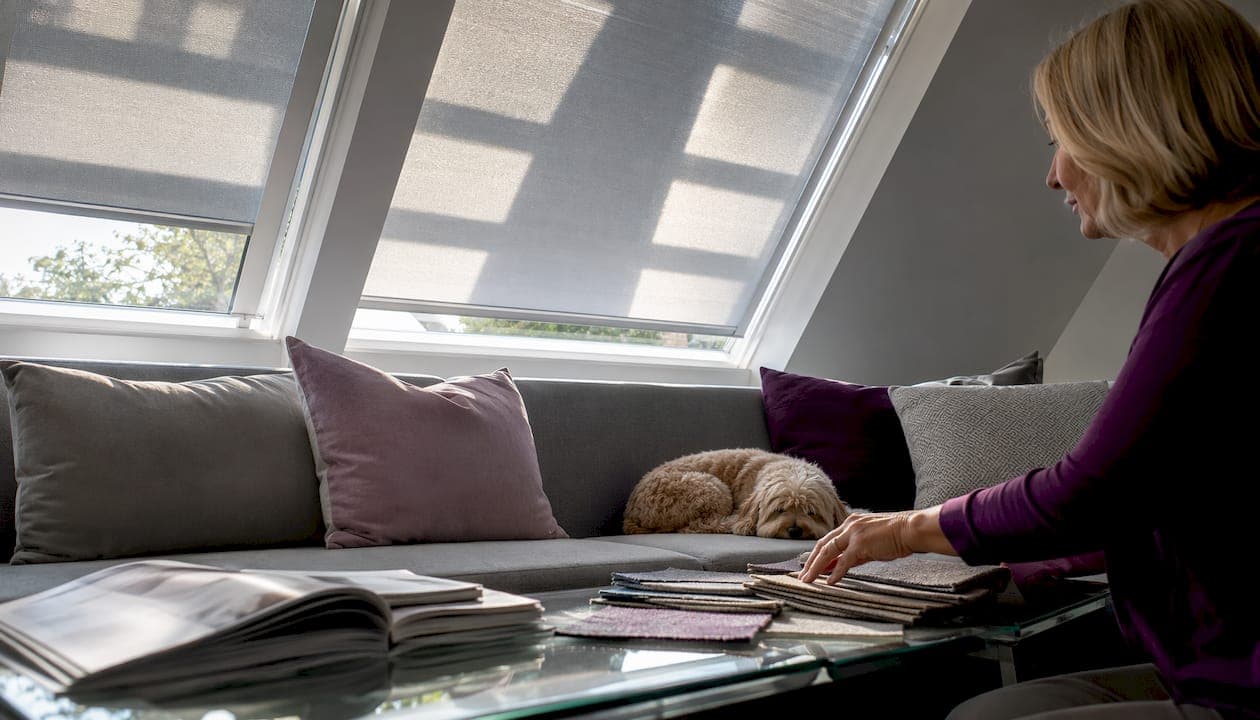
Skylight window shades are custom-fitted coverings designed specifically for overhead or angled skylight openings, where standard window treatments simply won't work. Unlike a wall window, a skylight faces direct sun for hours at a stretch, which means uncontrolled glare, heat gain in summer, and heat loss in winter. The right shade solves all three problems at once.
Here's what makes them worth the investment:
- Light control: Choose light-filtering fabrics for soft, diffused daylight or blackout materials for complete room darkening, ideal for bedrooms and media rooms.
- Insulation: Cellular (honeycomb) construction traps air in pockets, creating a thermal barrier that reduces heat transfer year-round.
- Energy savings: Less heat gain in summer and less heat loss in winter translates directly to lower HVAC costs.
- Motorization: Remote or app-controlled options make adjustments effortless, especially for skylights mounted out of arm's reach.
- Durability: Fabrics engineered for UV exposure resist fading and degradation far longer than standard window treatment materials.
VELUX, one of the most recognized names in skylight systems, offers solar-powered shades designed to fit their skylight frames precisely, with room-darkening options included as standard on many models. Made in the Shade Bucks County brings that same level of precision to custom installations across Bucks County, PA and Mercer County, NJ, with professional measurement and fitting included.
Table of Contents
- What types of skylight window shades are available?
- How skylight shades improve comfort, energy efficiency, and acoustics
- Installation options and how to get the fit right
- Why Made in the Shade Bucks County gets skylight shades right
- Custom skylight shades, done for you by Mitsbuckscounty
- Key Takeaways
What types of skylight window shades are available?
Not every shade works on every skylight. The slope, size, and room function all influence which type performs best.
- Cellular (honeycomb) shades: The top performer for insulation. The multi-layer honeycomb structure traps air and acts as a thermal buffer, making these the go-to choice for rooms where temperature control matters most.
- Roller shades: Clean, minimal profile. They roll up compactly and work well on flatter skylights. Available in light-filtering or blackout fabrics.
- Pleated shades: A softer, more decorative look than roller shades, with similar fabric options. Slightly less insulating than cellular but easier to customize for unusual shapes.
- Blackout shades: Any of the above constructions can use blackout fabric. Blackout and light-filtering fabrics are the two primary material categories, with blackout blocking virtually all incoming light.
- Light-filtering shades: Diffuse sunlight without eliminating it. Great for living areas where you want brightness without glare.
| Shade Type | Insulation Level | Light Blockage | Best Slope | Motorization |
|---|---|---|---|---|
| Cellular (honeycomb) | High | Light-filtering or blackout | 5°+ | Yes |
| Roller | Low–Medium | Light-filtering or blackout | 5°+ | Yes |
| Pleated | Medium | Light-filtering or blackout | 5°+ | Yes |
| Blackout (any style) | Varies by construction | Near-total | Varies | Yes |
| Light-filtering (any style) | Varies by construction | Partial | Varies | Yes |
All of these styles can be integrated with motorized smart home systems, letting you schedule adjustments or control shades by voice command through platforms like Google Home or Amazon Alexa.
How skylight shades improve comfort, energy efficiency, and acoustics
The thermal argument for skylight shades is straightforward. A bare skylight is essentially a hole in your insulation envelope. Cellular shades address this directly: their honeycomb construction acts as a thermal barrier, supporting year-round temperature regulation and reducing the load on your heating and cooling system. That's not a minor benefit in a Bucks County winter or a mid-July heat wave.
Glare is the other issue most homeowners underestimate. Direct overhead sun creates harsh contrast that makes screens unreadable and rooms uncomfortable. A light-filtering shade softens that light into something usable. Blackout shades eliminate it entirely, which matters in nurseries, home theaters, or any bedroom where a skylight faces east.
One benefit that surprises most people: cellular shades also absorb sound, reducing the acoustic echo that bare skylights can amplify, particularly in rooms with hard floors or high ceilings.
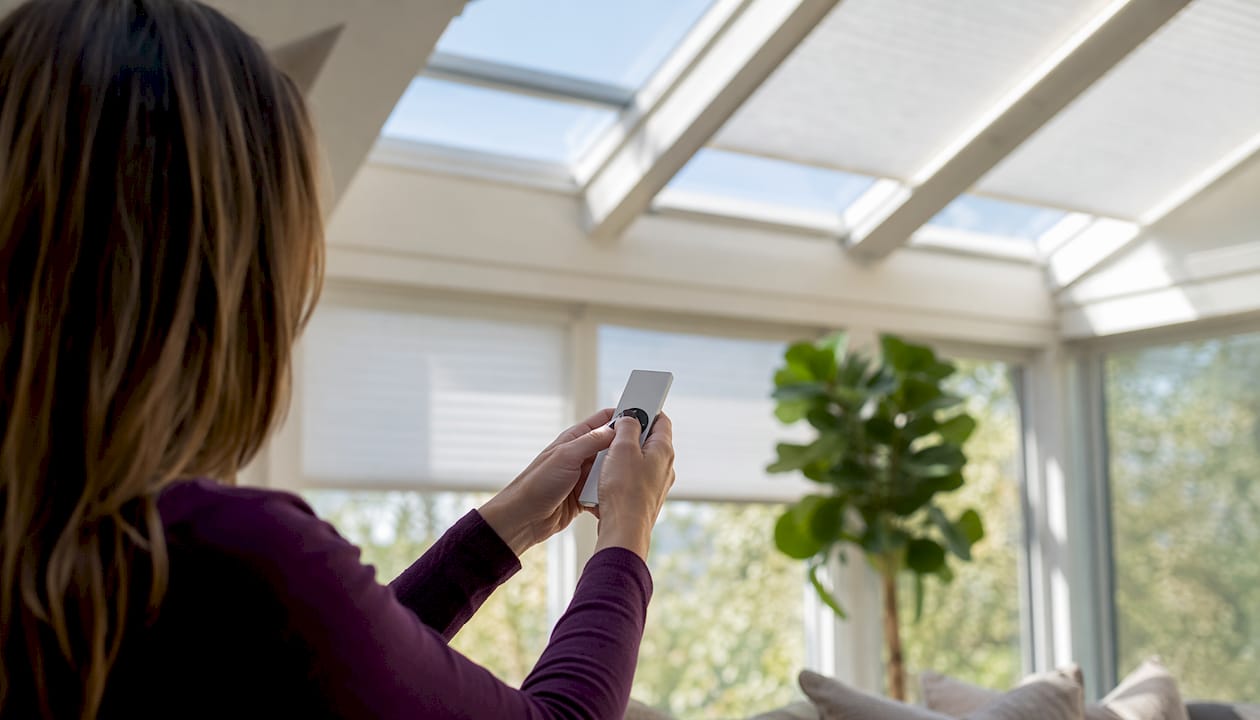
Motorized shades add a practical layer to all of this. Adjusting a skylight shade manually requires a pole or a ladder. With motorization, you set a schedule or tap an app, and the shade moves on its own. For energy-efficient window treatments, that ease of use means you'll actually use the shade the way it's meant to be used, rather than leaving it in one position for weeks.
Installation options and how to get the fit right
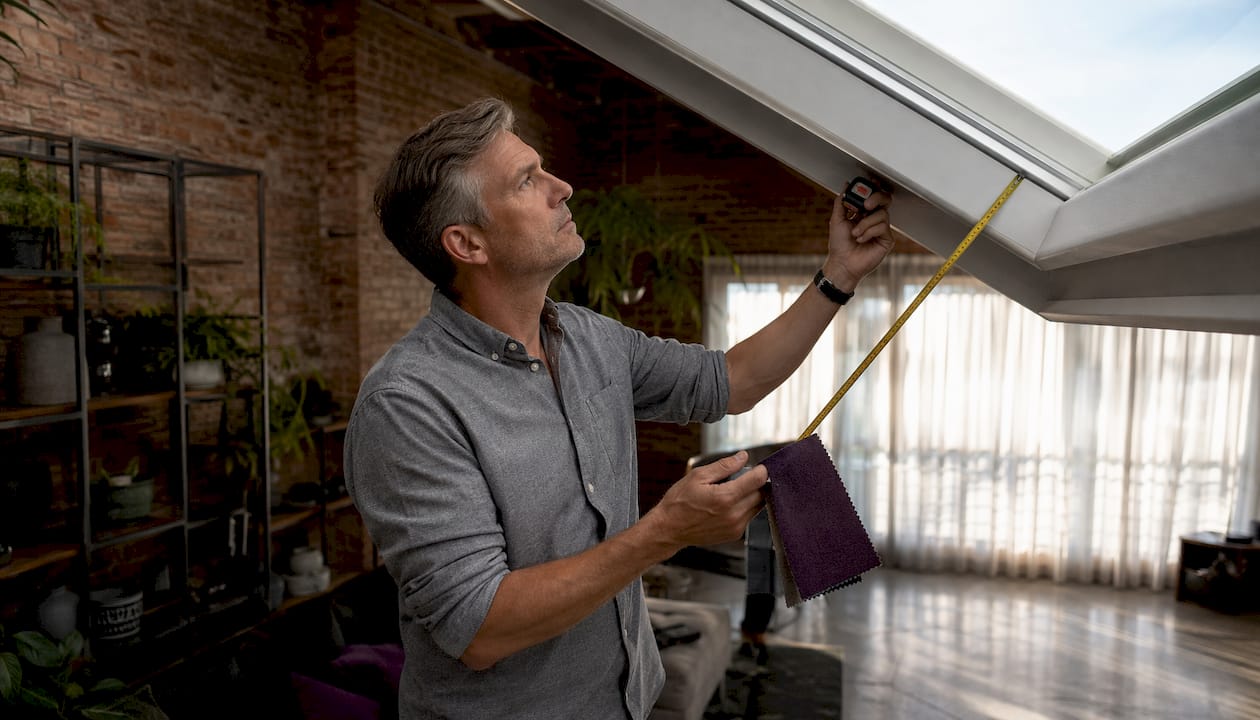
Most skylight shades use an inside frame mount, which positions the shade within the skylight's own frame rather than on the surrounding ceiling. This works for any skylight with a minimum slope of 5°, which covers the vast majority of residential installations.
Getting the measurement right is non-negotiable. Accurate sizing means measuring the width and height of the inside frame at multiple points, then checking both diagonals to confirm the frame is square. Size variances beyond 3/8 inch will cause gaps that undermine both the shade's appearance and its thermal performance.
Pro Tip: Leave a small air gap between the shade fabric and the skylight glass. Direct contact traps heat against the glass, which can damage the shade material over time and reduce its insulating effect.
Power options for motorized shades come down to two practical choices:
- Rechargeable battery motors: Simple to install, no wiring required. Batteries typically last months between charges depending on use frequency.
- Solar panel charging: A small panel mounted near the skylight converts incoming sunlight to electrical energy, keeping the battery continuously charged without any manual intervention. Ideal for skylights that receive consistent sun exposure.
For cleaning, most skylight shade fabrics respond well to a soft brush attachment on a vacuum or a lightly damp cloth for spot cleaning. Avoid soaking the fabric or using harsh chemical cleaners, which can break down UV-resistant coatings. Periodic dusting every few weeks keeps the material looking fresh and extends its lifespan significantly.
Why Made in the Shade Bucks County gets skylight shades right
Custom skylight shades are one of the more technically demanding window treatment categories. The angles, the heat exposure, the motorization wiring, and the precise frame measurements all leave room for error that a standard DIY approach tends to find the hard way.
Mitsbuckscounty brings the entire process to your home. The in-home consultation means you're looking at actual fabric samples in your own light conditions, not guessing from a website swatch. Every measurement is taken by someone who has done this hundreds of times, and the installation is handled by the same team. Manufacturer warranties from industry-leading brands back every product, so the quality assurance runs from the factory through to the finished installation.
The product range covers the full spectrum: cellular shades for maximum insulation, motorized options for hard-to-reach skylights, blackout fabrics for bedrooms, and light-filtering materials for living spaces. If your home has both skylights and standard windows, Mitsbuckscounty can coordinate treatments across the whole space so everything reads as intentional rather than assembled from different sources.
Custom skylight shades, done for you by Mitsbuckscounty
Choosing the right skylight shade is one thing. Getting it measured, ordered, and installed so it actually performs is another. Mitsbuckscounty handles both, with a free in-home consultation that brings the samples to you and professional installation that guarantees the fit.
For homeowners in Bucks County, PA and Mercer County, NJ, this is the practical alternative to ordering online and hoping the dimensions work out. You get expert guidance on fabric, motorization, and energy efficiency from someone who knows your home's specific conditions, backed by manufacturer warranties on every product. Schedule your free in-home consultation and see the full range of custom skylight and window shade options in person.
Key Takeaways
Cellular skylight shades deliver the strongest combination of insulation, light control, and acoustic comfort, and professional installation is the single biggest factor in long-term performance.
| Point | Details |
|---|---|
| Cellular shades lead on insulation | Honeycomb construction traps air and reduces heat transfer in both directions year-round. |
| Fabric choice drives function | Blackout fabrics block nearly all light; light-filtering fabrics diffuse sunlight without eliminating it. |
| Measurement precision matters | Width, height, and diagonal checks must stay within 3/8 inch to avoid gaps and heat buildup. |
| Motorization solves the access problem | Remote or solar-powered motors make daily adjustments practical for any skylight height. |
| Mitsbuckscounty offers full-service installation | Free in-home consultation, professional measurement, and manufacturer-warranted products in Bucks County and Mercer County. |