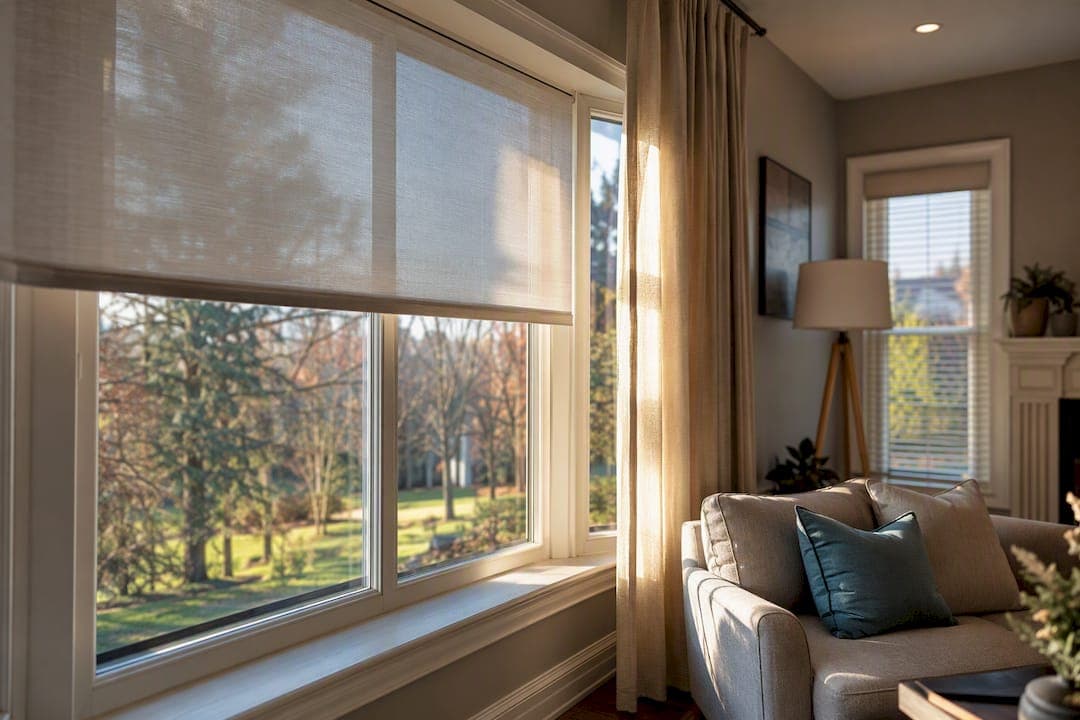
For most living rooms, layered solar or roller shades with floor-length drapery give you the best balance of view, privacy, and style, while cellular shades earn their keep on sun-heavy or hard-to-insulate windows. Motorize selectively rather than everywhere, and bring in a professional for measuring and installation once you have more than one oddly sized or high window. The rest comes down to matching the treatment to how you actually use the room.
TL;DR:
- Cellular shades are ideal for insulating drafty or heat-loss windows, especially south- or west-facing ones, reducing cooling costs by up to 25 percent.
- Layering solar or roller shades with floor-length drapery provides a versatile balance of daylight, privacy, and style for most living rooms.
- Custom measuring and installation are crucial for irregular or oversized windows, and professional help ensures precise fit and warranty coverage.
- Motorization makes sense if at least three of five conditions are met, such as hard-to-reach windows, smart-home integration, or safety concerns.
- Heavier fabrics like drapery improve acoustics by absorbing sound, particularly in rooms with hard floors, high ceilings, and minimal furniture.
Table of Contents
- Living Room Window Treatments: Which Style Fits Your Windows
- How Do You Choose Fabric and Style for a Living Room?
- How Do Shades Affect Privacy and Energy Costs?
- Is Motorization Worth It for Your Living Room?
- What's the Right Way to Measure and Install Window Treatments?
- How Should You Maintain and Budget for Window Treatments?
- Do Window Treatments Actually Reduce Noise?
- Tony's Perspective: What Actually Works in Bucks County Living Rooms
- Get a Free In-Home Consultation for Your Living Room
- Sources
- FAQ
Living Room Window Treatments: Which Style Fits Your Windows
Every living room window is doing a different job. A bay window facing the street needs privacy without losing light. A south-facing sliding door needs heat control. A picture window over a fireplace mantel is mostly about the view. Matching the treatment to that job, rather than picking one style for the whole house, is the mistake most homeowners make first.
Here's how the main categories stack up for living-room use:
- Cellular (honeycomb) shades trap air in their pocketed cells, making them the strongest choice for insulation on drafty older windows or large glass expanses that lose heat fast.
- Roller and solar shades stay flat against the glass, preserve sightlines, and cut glare and UV without blacking out the room, which is why Hunter Douglas and other manufacturers position them as the go-to for view-focused rooms.
- Roman shades fold into soft horizontal pleats when raised, giving a tailored, fabric-forward look that works well in more formal or traditionally styled living rooms.
- Venetian and wood blinds offer precise tilt control for glare, a practical pick for rooms with a television or reading nook that fights afternoon sun.
- Plantation shutters are the most permanent option, adding real architectural character and strong light control, and they tend to outlast fabric treatments by decades.
- Drapery adds softness, sound absorption, and a finished, layered look, but rarely handles daylight control well on its own in a living room.
Off-the-shelf treatments work fine for standard-size windows in good condition. Custom construction matters most on bay windows, oversized sliders, arched or irregular openings, and anywhere you plan to add a motor, since stock hardware rarely accommodates those variables cleanly.
How Do You Choose Fabric and Style for a Living Room?
Fabric weight changes more than the look of a room. Heavier weaves like linen blends and room-darkening polyesters absorb sound and diffuse light into a soft glow, while sheers and light-filtering fabrics let in brightness but do little to soften a hard-surfaced room. If your living room has hardwood floors, a stone fireplace surround, and a leather sectional, a heavier drapery fabric will noticeably calm the acoustics and the light.
Choosing between sheer, light-filtering, and blackout comes down to how the room gets used:
- Sheer fabrics suit living rooms that get used mostly during the day and rarely need full privacy.
- Light-filtering fabrics are the middle ground most families land on, softening glare while keeping the room from feeling closed off.
- Blackout lining matters most for rooms doubling as a home theater or where a west-facing window turns the space into a greenhouse by late afternoon.
Scale matters just as much as material. Mounting drapery rods 4 to 6 inches above the window frame and letting panels break gently at the floor makes ceilings feel taller and windows feel larger. Designer roundups consistently favor pairing a minimal solar shade underneath a floor-length drape, which gives daytime views and evening privacy without the bulk of two heavy layers, according to Elle Decor's collection of window treatment ideas.
Pro Tip: Before you commit to a fabric swatch under store lighting, hold it up against your actual living room window at midday and again at dusk. Color and opacity shift more than most people expect once real daylight hits it.
How Do Shades Affect Privacy and Energy Costs?
Cellular shades are the clearest energy play in this category. Their honeycomb structure creates a genuine air pocket against the glass, which matters most on south and west-facing windows or any wall with oversized glass that loses conditioned air fast, a pattern manufacturers consistently point to when recommending cellular shades for insulation-focused rooms. Solar shades take a different approach: they don't insulate as effectively, but they block UV rays and glare while keeping your view intact, which is why they're the default recommendation for a living room with a good backyard sightline.
Privacy needs shift by room use, not just window size. A street-facing bay window in a Doylestown colonial needs a different solution than a rear-facing slider looking out on a fenced yard in Yardley or Newtown.
A few decision rules simplify the process:
- If the window faces west or gets strong afternoon sun, prioritize a cellular or solar shade before worrying about style.
- If the room is used mostly at night for movies or entertaining, add a blackout layer or heavier drapery on top of a daytime shade.
- If privacy is the main concern and the window faces a street or neighbor, layer a light-filtering shade under sheer or opaque drapery rather than relying on one treatment alone.
Realistic cooling savings on south and west-facing rooms run roughly 15 to 25 percent when smart shades are combined with proper placement and scheduling, a meaningful number for anyone whose living room turns into the hottest room in the house every July. For guidance on balancing daylight against privacy window by window, our privacy treatment breakdown by room walks through common layouts.
Is Motorization Worth It for Your Living Room?
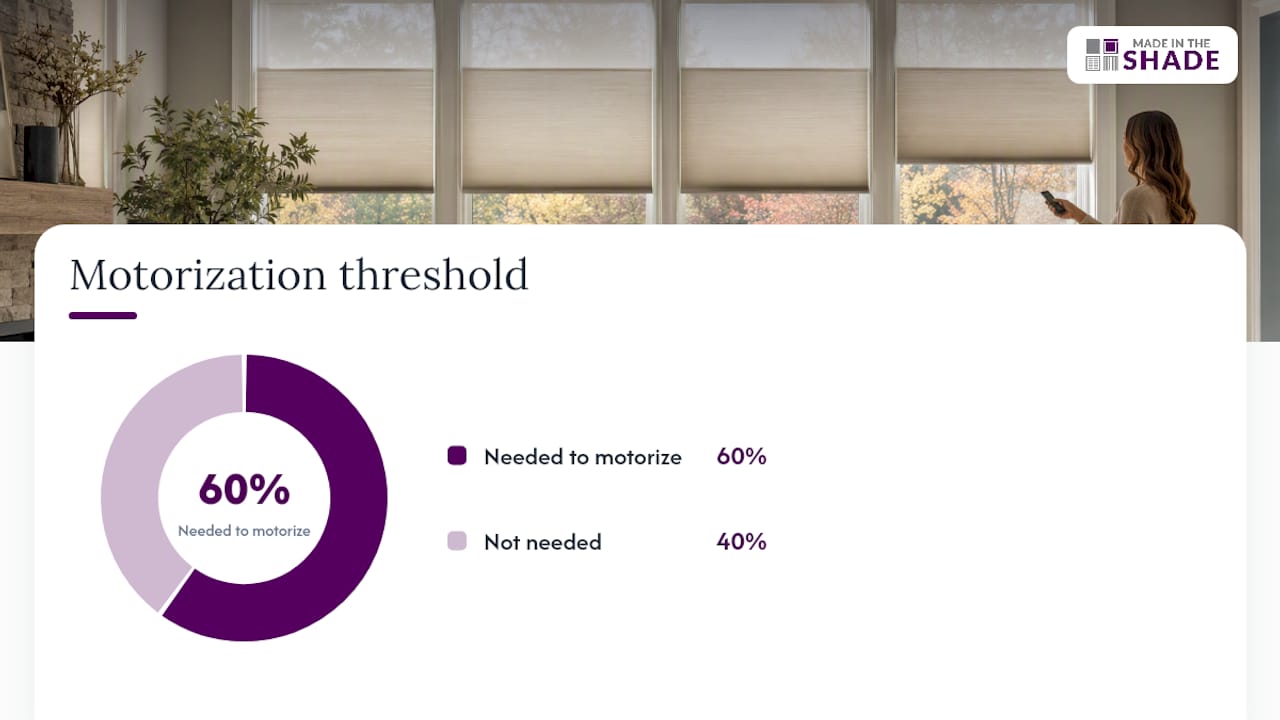
Motorization is worth the added cost when a window meets at least three of five conditions, according to the scorecard laid out in industry guidance on motorized roller shades. Run your windows through this list before deciding:
- The window is genuinely hard to reach, such as above a stairwell or behind a large sectional.
- You already use smart-home routines and want shades tied into that system.
- The window takes significant solar heat, typically south or west-facing glass.
- There's a child-safety reason to eliminate cords entirely.
- Multiple shades in the room need to move together as a scene, like a full bank of windows across a great room.
Fewer than three, and manual operation usually makes more sense for that window. Cost tiers move in three steps: manual shades are the least expensive entry point, motorized versions add the cost of the motor and power system, and full smart integration adds hub or app compatibility on top of that. Retrofitting an existing shade with an add-on motor, rather than replacing the whole treatment, has become one of the more affordable ways to add automation to a single problem window.
Automating only the highest-impact windows, rather than the whole room, tends to capture most of the comfort and energy benefit for a fraction of the cost of full automation, per the same motorization research.
Power options include battery packs that recharge periodically, hardwired motors for permanent installs, and solar-assist chargers for windows that get consistent sun. Most systems on the market today integrate with Alexa, common smart-home hubs, and increasingly with Matter-based ecosystems, which matters if you already have other connected devices in the house. Our window motorization guide covers power and integration choices in more depth if you're comparing options for a specific room.
What's the Right Way to Measure and Install Window Treatments?
Measure every window in three places: width at the top, middle, and bottom, and height at the left, center, and right. Older homes throughout Bucks County and Mercer County frequently have windows that are slightly out of square, and using the smallest width and largest height measurement prevents a shade that binds or leaves gaps.
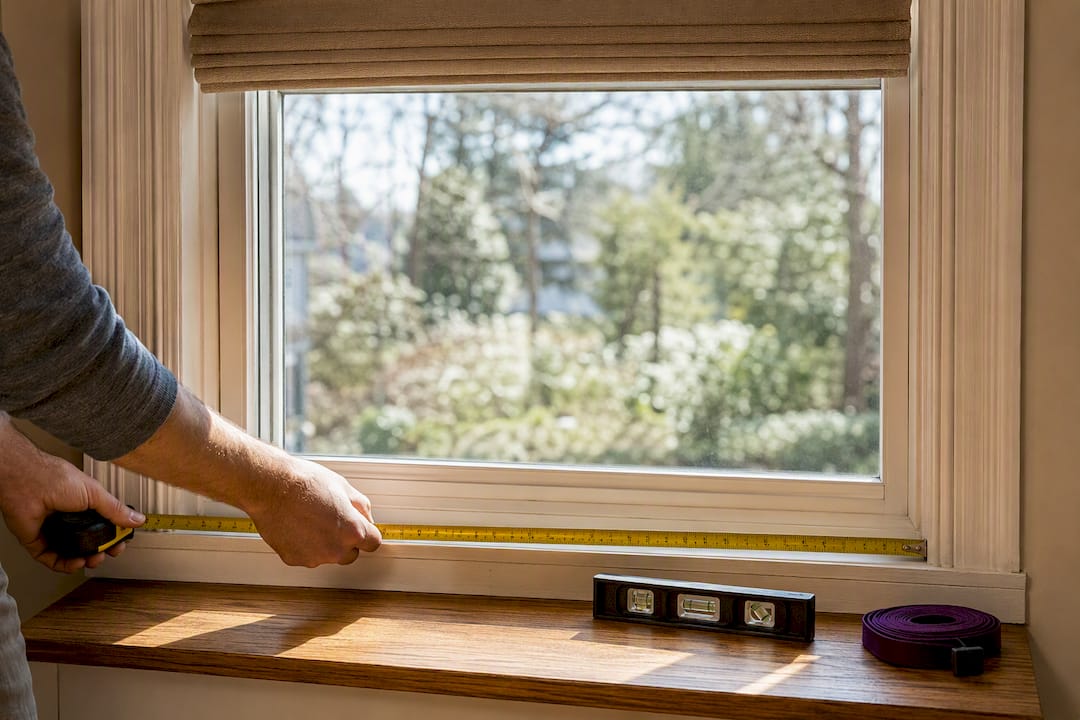
Inside mount gives a cleaner, built-in look and works when the window frame has enough depth to accommodate the shade's headrail. Outside mount is the better call when the frame is shallow, when you want to visually widen a narrow window, or when you need to hide uneven trim. Either way, account for stack height, the space the shade takes up when fully raised, especially on tall living room windows where a bulky headrail can interfere with valances or crown molding.
Certain setups call for specialized hardware: continuous cord tracks for wide sliding door treatments, side channels for a cleaner blackout seal, or motorized headrails built to house a battery or hardwire connection. If you're coordinating window treatments with glass interior doors or other sightline features in an open living space, design coordination between window and door openings is worth thinking through before you order anything.
Pro Tip: If your living room has more than one window style, an oversized picture window, or you're adding motorization anywhere in the room, get a professional measurement instead of relying on a DIY tape job. A quarter-inch error on a motorized headrail can mean a shade that never sits flush.
Hire a professional when windows are oversized, arched, or irregular, when you're motorizing anything, when you need multiple rooms to match precisely, or when you want a warranty that actually covers the installation, not just the fabric.
How Should You Maintain and Budget for Window Treatments?
Routine care is simple for most treatments. Dust roller and cellular shades weekly with a microfiber duster or the brush attachment on a vacuum, and spot clean fabric shades with a damp cloth for light marks. Drapery needs a more careful approach, since heavier fabrics and linings can shrink or lose shape in a home washer.
A few durability notes worth knowing before you buy:
- Cellular and solar shade fabrics generally hold their shape and color for many years with light dusting alone.
- Wood and faux-wood shutters are among the most durable options in this category and rarely need more than an occasional wipe-down.
- Drapery fabrics, especially natural fibers, benefit from professional cleaning every couple of years to avoid dust buildup and fading.
If a fabric treatment develops stains, odors, or smoke damage that basic cleaning won't touch, it's worth calling in a specialist rather than risking the fabric with an aggressive home treatment. Resources on handling delicate fabric issues in high-end interiors cover when professional intervention makes sense.
Budget priority should follow this order: quality measuring and installation first, since a poor fit undermines even expensive fabric; your highest-impact windows second, typically the largest or sunniest in the room; and motorization or decorative upgrades last, once the fundamentals are covered.
Do Window Treatments Actually Reduce Noise?
Heavier fabric treatments measurably soften a room's acoustics, even though they were never designed as soundproofing. Living rooms with hard floors, high ceilings, and minimal furniture tend to have an echo or a "live" sound quality, and dense fabric absorbs sound waves that would otherwise bounce off bare glass and hard walls.
Drapery does more here than shades or blinds. A floor-length curtain in a mid-weight or heavy fabric, especially one with a lining, absorbs sound across a wider range of frequencies than a flat roller or cellular shade mounted tight to the glass. That's part of why a living room with floor-to-ceiling windows and no soft treatments often sounds harsher than the same room with drapery installed, even before you change anything else in the space.
For meaningful street noise reduction, treatments alone won't get you there. Double-pane glass and wall insulation do the heavier lifting against outside traffic or a busy road. What drapery and heavier shades do accomplish is softening interior echo and reducing sound transfer between open living spaces, like a great room that flows into a kitchen or a two-story foyer.
If noise control matters as much as light control in your living room, that's a case for layering rather than picking one treatment. A solar or cellular shade handles daylight and privacy, while a substantial drapery panel on top absorbs sound and adds visual warmth. Rooms used for home theaters, music, or frequent gatherings benefit most from this combination, since the acoustic improvement compounds with every added layer of soft material.
Tony's Perspective: What Actually Works in Bucks County Living Rooms
Most of the living rooms I walk into around Doylestown, Newtown, and Yardley have the same basic problem: too much afternoon sun on one wall and not enough privacy on another. The combination that keeps coming up as a real solution, not just a design trend, is a solar roller shade paired with a linen or linen-blend drape. It handles the glare from a west-facing bay window without losing the yard view, and the drape softens the room once the sun drops.
What changes people's minds almost every time is seeing fabric and shade samples against their actual walls, in their actual light, rather than scrolling a website. A cream that looks warm online can read stark under living room lighting, and a "blackout" sample can still let in more glow than someone with a media setup wants. That's the real value of an in-home consultation over ordering blind.
— Tony
Get a Free In-Home Consultation for Your Living Room
Made in the Shade Bucks County brings the entire decision process to your living room instead of asking you to guess from swatches on a screen. There's no showroom to drive to and no pressure to choose on the spot. A design consultant brings real fabric and shade samples to your home, measures your windows professionally, and walks you through motorized and smart-home-compatible options that work with Alexa and other major platforms, along with cordless, child-safe lift options if you have young kids or pets in the house.

That in-home visit is where the guesswork actually gets resolved: you see the cellular shade against your own wall color, you test the solar shade's opacity in your own afternoon light, and you get a firm measurement instead of an estimate. Every installation comes with generous manufacturer warranties, most backed by limited lifetime coverage, so the investment is protected well past install day. If you're ready to move from browsing to choosing, explore the custom shade options available through Made in the Shade Bucks County or go ahead and request your free in-home consultation to get a design consultant and sample kit scheduled at your home in Bucks County or Mercer County.
Sources
- Are Motorized Roller Shades Worth It?
- Smart Blinds vs Motorized vs Manual: Cost Comparison (2026)
- 54 window treatment ideas to elevate your space
- Hunter Douglas group — product category guidance
FAQ
What are the best window treatments for a living room?
Layered solar or roller shades under floor-length drapery work for most living rooms, while cellular shades are the stronger pick for sun-heavy or poorly insulated windows.
Are blinds or curtains better for a living room?
Blinds give more precise light control and durability, while curtains add softness and sound absorption. Many living rooms benefit from combining both rather than choosing one exclusively.
Do cellular shades really save on energy costs?
Cellular shades create an insulating air pocket that helps most on south and west-facing windows or oversized glass, and smart shading combined with good placement can realistically cut cooling costs by 15 to 25 percent in those rooms.
Is it worth motorizing living room shades?
Motorization pays off when a window meets at least three of five conditions: hard to reach, genuine smart-home use, heavy solar heat, a child-safety need, or multiple shades operating as one scene.
When should I hire a professional instead of measuring myself?
Call a professional for oversized, arched, or irregular windows, any motorized installation, multi-room fabric matching, or whenever a warranty on the installation itself matters to you.